 Scott Tompkins

Every client’s security logs sat in the same storage. What kept them apart was a filter applied to every query. If that filter is wrong, one client sees another’s data, or sees nothing at all. Getting that right was the hard part of this platform.
Some background first. A SIEM collects security logs from an organization’s computers and watches them for signs of trouble. I built this one to serve many clients from a single platform. It ran on the on-premise Kubernetes platform, served over 1,500 agents across its tenants, and took in 6,000–10,000 logs per second around the clock.
The rest of this page follows one log event through it, from a client’s machine to an analyst’s screen. At each stop it says where the client’s identity is set, carried or enforced.
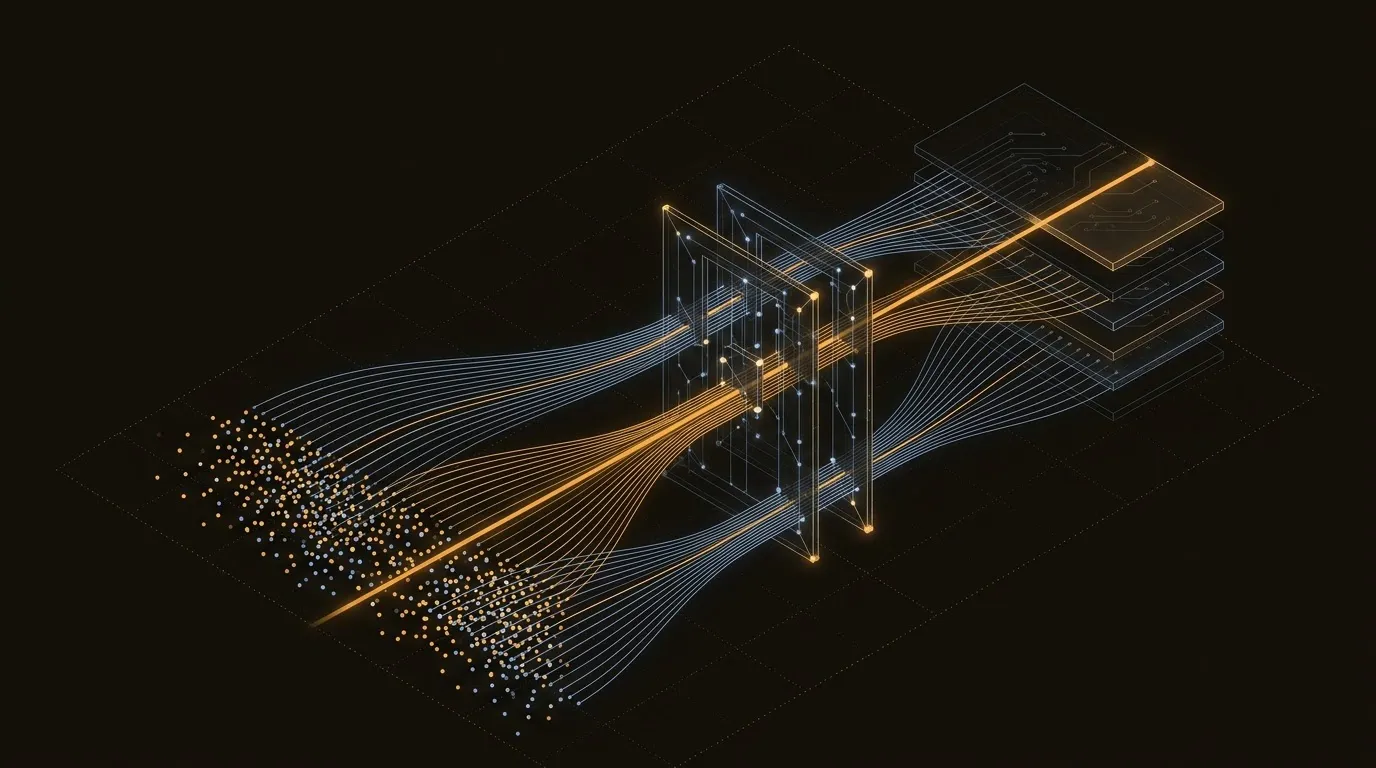
Why one platform and not one per client
The simple design is a separate SIEM for each client, called a tenant here. That works for a handful. After that the work grows with the client list: every tenant adds another cluster to monitor, another set of upgrades to coordinate and another failure domain to understand.
I wanted a shared platform where tenants still get a guarantee of isolation. Three things made that hard. Agents had to enroll securely from different networks, some across the public internet. Tenant data had to be strictly separate without creating a pile of per-tenant indices. And all of it had to run on infrastructure I controlled, with upgrades I could test first.
An agent enrolls
An agent is the small program on each monitored machine. Before it sends a single log line, it connects over TLS to an endpoint that belongs to one tenant and presents an enrollment token unique to that tenant. cert-manager issues the certificates automatically.
The certificate and token together establish which tenant the machine belongs to from the first packet. Identity is enforced by the connection itself, so it does not depend on a setting that someone could get wrong later.
A manager reads the event
Wazuh managers receive the telemetry, parse it and enrich it.
A pipeline tags and routes it
Logstash pipelines route the data and attach the tenant’s metadata to each event. That tag stays with the event all the way to storage.
The pipelines are also safe to replay. Sometimes old data has to be sent through again, when a tenant is onboarded or after a recovery. A replay restores each event’s original timestamp instead of using the time it was ingested, so last month’s data does not set off alerts dated today or distort the dashboards.
OpenSearch stores it in shared streams
The rest depends on this decision. All tenants’ events go into the same OpenSearch datastreams, and a feature called Document-Level Security (DLS) filters every query so a user can only see documents carrying their own tenant’s tag.
The other way is a separate set of indices for each tenant. That created hundreds of indices, made the cluster painful to manage and made query speed unpredictable.
DLS configuration is subtle. Get the filter wrong and you either leak one tenant’s data to another or return nothing at all. It needed careful testing and a clear picture of how tenant identity travels from the first packet to the stored document.
OpenSearch ran as a distributed cluster with a group of nodes for each job: Client nodes to coordinate queries, Master nodes for cluster state, Hot nodes for recent data, Warm nodes for older data, and Ingest nodes for pipeline processing. Queries did not compete with indexing, and recent data sat on fast storage while older data moved to cheaper disks.
- Hotrecent data on fast storage
- Warmaged data on cheaper disks
- Snapshotcaptured before removal
- Deleteremoved by lifecycle policy
- Client query coordination
- Master cluster state
- Ingest pipeline processing
Case tools pick it up
From there events flow to IRIS for case management, MISP for threat intelligence, and n8n for automation.
What the shared design bought
Adding a tenant no longer meant adding a cluster, so the operating work stayed flat as the tenant count grew. Analysts could query everything they were authorized to see without stitching clusters together. Agents enrolled securely from anywhere, with no VPN. And the pipeline observability showed when a stage was struggling before analysts felt it.